
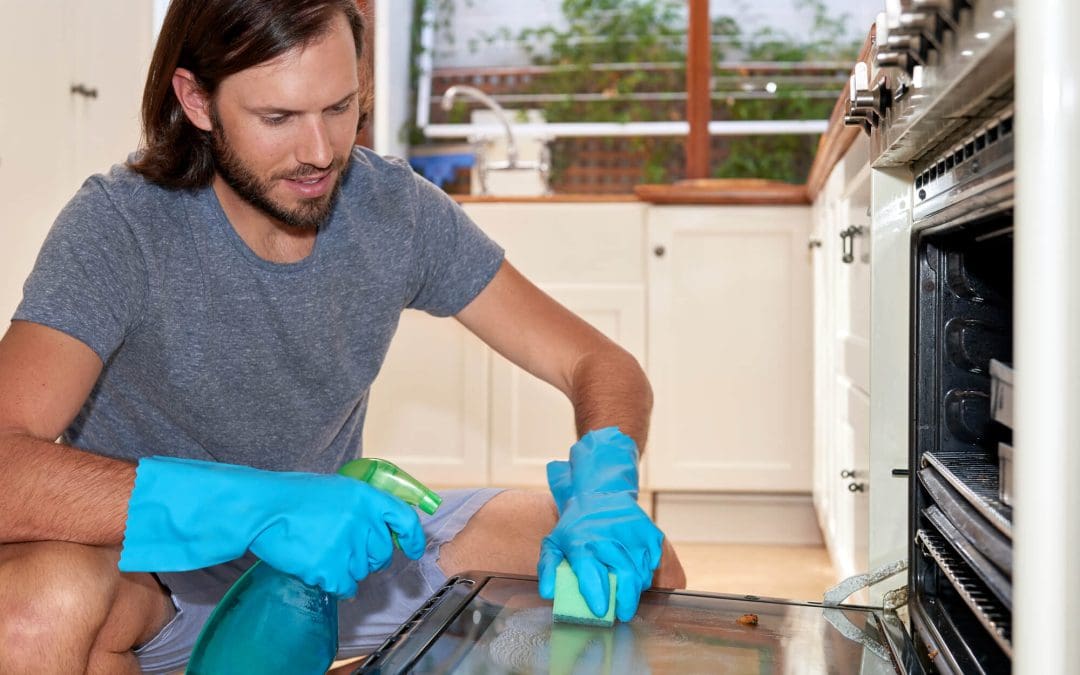
Grease splatters, food drips, and burned-on residue accumulate with every cooking session, and what would have been a quick wipe-down at any point along the way becomes a significant cleaning project once it’s fully carbonized onto every surface. The good news is that cleaning your oven doesn’t require harsh chemicals, hours of effort, or the self-clean cycle that many homeowners are understandably cautious about running. It requires the right method matched to the oven’s current state.
Choosing the Right Method
The method you use to clean your oven should match how dirty it is and how much time you have. There are three main approaches: the self-clean cycle, commercial oven cleaner, and the natural baking soda method, each with specific applications and drawbacks. The self-clean cycle heats the oven to 800 to 1,000°F to incinerate residue into ash that wipes away easily. It’s effective on heavily soiled ovens but runs two to six hours, produces heat and smoke, and stresses the oven’s components. For moderately soiled ovens, it’s more than necessary. Commercial oven cleaners are highly effective on baked-on grease but contain caustic chemicals requiring gloves, eye protection, and good ventilation. They work quickly with thirty minutes to overnight dwell time, but thorough rinsing is essential to avoid off-gassing during future cooking. The baking soda method is the most accessible approach to clean your oven and the one most appropriate for regular maintenance. It’s chemical-free, safe, and effective on light to moderate soil.
How to Clean Your Oven With Baking Soda
The baking soda method requires only baking soda, white vinegar, and water, ingredients most homeowners already have. Remove the oven racks and set aside. Mix half a cup of baking soda with enough water to form a spreadable paste. Spread across every interior surface, avoiding the heating elements. The paste will turn brownish as it contacts grease. Leave to dwell for at least twelve hours or overnight. After the dwell time, wipe out as much dried paste as possible with a damp cloth. Spray white vinegar onto any remaining residue; the fizzing reaction lifts stubborn spots. Wipe clean, repeating as needed. For the oven door glass, the same baking soda paste applied and allowed to dwell for thirty minutes before scrubbing with a non-scratch pad removes the baked-on splatter that obscures the view through the glass.
How to Clean Your Oven Racks
Oven racks are often the most neglected part of oven cleaning. The bathtub method works best for heavily soiled racks. Line the bathtub with old towels to prevent scratching, lay the racks flat, and fill with hot water and half a cup of dish soap. Soak for at least four hours; overnight is better. Most residue wipes away with minimal scrubbing after a long soak. For stubborn spots, baking soda paste scrubbed with a non-scratch pad finishes the job. For lighter soil, a large trash bag with a quarter cup of ammonia sealed around the racks and left overnight loosens residue through fume action without submersion.
Frequently Asked Questions (FAQs)
How often should I clean my oven?
A quick wipe-down after any significant spill prevents accumulation and keeps deeper cleaning manageable. A thorough interior cleaning every three to six months suits moderate home cooking use. The self-clean cycle is best reserved for annual use rather than routine maintenance, given the heat and stress it places on components.
Is the self-clean cycle safe to use regularly?
It’s safe when used as designed, but frequent use isn’t recommended. The extreme heat stresses the oven’s thermal components, door gaskets, and control panel over time. Use it for heavily soiled ovens where manual cleaning isn’t keeping up, not as a substitute for regular maintenance. Always remove racks before running self-clean, as the heat can discolor or warp them.
Can I clean your oven with vinegar alone?
Vinegar alone handles light surface residue and works well as a rinse to remove baking soda paste, but it isn’t strong enough to cut through baked-on grease. The combination of baking soda dwell time followed by vinegar to activate and lift loosened residue is significantly more effective than vinegar applied alone.
What should I do if my oven smells after cleaning?
Residual smell after cleaning is typically caused by baking soda paste not fully rinsed, chemical cleaner residue, or self-clean ash not completely wiped out. Heat the oven to 350°F for fifteen to twenty minutes with good ventilation; this burns off remaining residue and eliminates the smell. If it persists, wipe the interior again with a damp cloth and repeat.
How do I keep my oven cleaner between deep cleaning sessions?
Oven liners are the most practical tool for maintaining a clean oven floor between sessions. They’re removable and dishwasher-safe. Covering casseroles and roasting pans with foil reduces splatter on the walls and ceiling. Wiping the door glass and visible surfaces while the oven is warm after cooking prevents the accumulation that makes future cleaning harder.
GoPro Home Inspections offers inspection services to homebuyers and sellers. Contact us to schedule an appointment.