
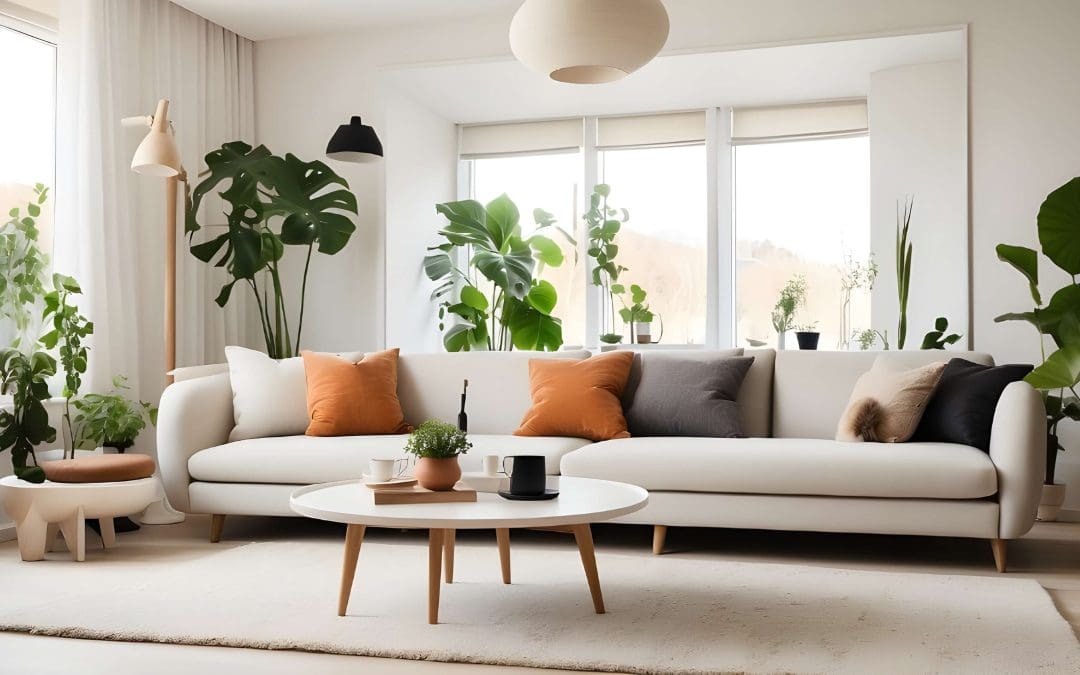
The principles that make a small room feel larger are rooted in how the eye reads a space: the colors on the walls, the scale of the furniture relative to the room, how light moves through the space, and where the eye is led when someone enters. Applying these principles with intention produces a room that feels significantly more spacious than its actual square footage.
Design Principles That Make a Small Room Feel Larger
Color is the most immediate tool to make a small room feel larger. The instinct to paint a small room white is directionally correct but incomplete. What makes a wall color expand a room is the consistency across surfaces. A room where walls, ceiling, and trim are painted in the same or closely related tones reads as more continuous and spacious than one where contrasting trim and ceiling colors create visual boundaries that define the room’s limits. Removing heavy window treatments that block light and replacing them with sheer panels dramatically increases the sense of space by connecting the interior to the exterior. Mirrors placed to reflect natural light sources multiply the perceived light in the room and create the visual depth that makes a room feel larger than any paint color can achieve on its own.
Furniture Scale and the Importance of Placement
Furniture scale is the principle most homeowners get backwards. A small room filled with many small pieces reads as cluttered, while the same room with fewer, appropriately scaled pieces reads as spacious. A single sofa of appropriate length, two chairs, and a coffee table with clear floor space around each piece produces a more spacious feeling than five small pieces crammed against the walls. Furniture raised off the floor on visible legs allows the eye to see floor beneath the furniture, visually extending the floor plane. A sofa that sits directly on the floor or a bed with a solid base concealing the floor beneath makes the room feel heavier and more confined than the equivalent piece on visible legs.
Vertical Elements That Help Make a Small Room Feel Larger
The vertical dimension of a room is the opportunity most homeowners never use. Most small rooms are decorated as though the ceiling doesn’t exist: furniture, art, and accessories cluster at eye level and below, anchoring visual weight low and making the room feel compressed. Drawing the eye upward with tall bookshelves, curtains hung at ceiling height rather than at the window frame, or a vertically oriented piece of art makes the ceiling feel higher and the room feel taller. Curtains hung at ceiling height, even on a standard-height window, create the impression of a taller window and a taller room, and the visual effect on the sense of space is disproportionate to the cost of simply repositioning the curtain rod.
Frequently Asked Questions (FAQs)
Does dark paint always make a room feel smaller?
Not necessarily. A dark color applied consistently across all surfaces could make a small room feel more expansive by eliminating the visual boundaries that contrasting surfaces create. The rooms where dark paint makes a space feel smaller are those where it’s applied only to walls against white trim and ceiling, creating a defined box effect. A monochromatic dark room has a depth and ambiguity that could make the space feel larger than a standard white room with standard trim contrast.
What furniture arrangement makes a small room feel larger?
Keeping central floor space as clear as possible most directly makes a room feel larger. Pushing furniture against walls creates a large open center that emphasizes the room’s boundaries. Pulling furniture a few inches away from the walls and grouping it into a defined conversation zone makes the room feel more intentional and, paradoxically, more spacious. Furniture with visible legs and a limited total number of pieces produces the most significant improvement in perceived space.
Do mirrors actually make a room feel larger?
Yes, a large mirror on a wall opposite a window reflects both natural light and the view beyond the glass, effectively doubling the perceived depth of the room. The mirror’s effectiveness is directly related to its size: a large mirror produces significantly more spatial impact than several small ones, and a mirror that reflects something visually interesting produces more depth than one that reflects a blank wall.
Does removing clutter make a space feel larger?
Yes, visual clutter makes a room feel smaller because the eye has to process every object in the space, and that cognitive load creates a sense of compression. A small room with fewer, well-chosen objects feels more spacious than the same room with many objects regardless of their size.
What flooring choices help?
Large-format tiles or wide-plank wood floors reduce the number of grout lines and seams that visually divide the floor plane, making the floor read as more expansive. Running planks or tiles lengthwise in the direction of the room’s longest dimension draws the eye toward the far wall and makes the room feel longer. A continuous flooring material that runs into adjacent spaces without a transition strip eliminates the visual boundary between rooms and expands the perceived area of both.
GoPro Home Inspections offers inspection services to homebuyers and sellers. Contact us to schedule an appointment.